
THE ARNOLD JOSIAH & MIGNON INNISS FORD FOUNDATION
A world in which the histories, contributions, and cultural legacies of the African Diaspora are preserved, accessible, and recognized as an essential part of humanity's shared historical record.
We envision an enduring institution where historical evidence is safeguarded, overlooked voices are brought into the public record, scholars collaborate across borders, and future generations discover the people, ideas, and movements that shaped their heritage and the world.
Supporting education and innovation.
To research, document, preserve, and share the historical and cultural contributions of people of African descent, while advancing scholarship, public education, and cultural understanding across Africa, the Caribbean, the Americas, and the wider African Diaspora.
Inspired by the lives and legacies of Rabbi Arnold Josiah Ford and educator Mignon Inniss Ford, the Foundation fulfills this mission through archival preservation, scholarly research, digital collections, historical publications, documentary filmmaking, public exhibitions, lectures, and educational partnerships.
Preserving Historical Records.
The Foundation exists to ensure that historically significant lives, experiences, documents, and contributions are not lost to time, neglect, or limited access.
We seek to transform scattered historical records, unpublished scholarship, family collections, and overlooked narratives into an organized and enduring body of knowledge available for responsible research, education, and public understanding.
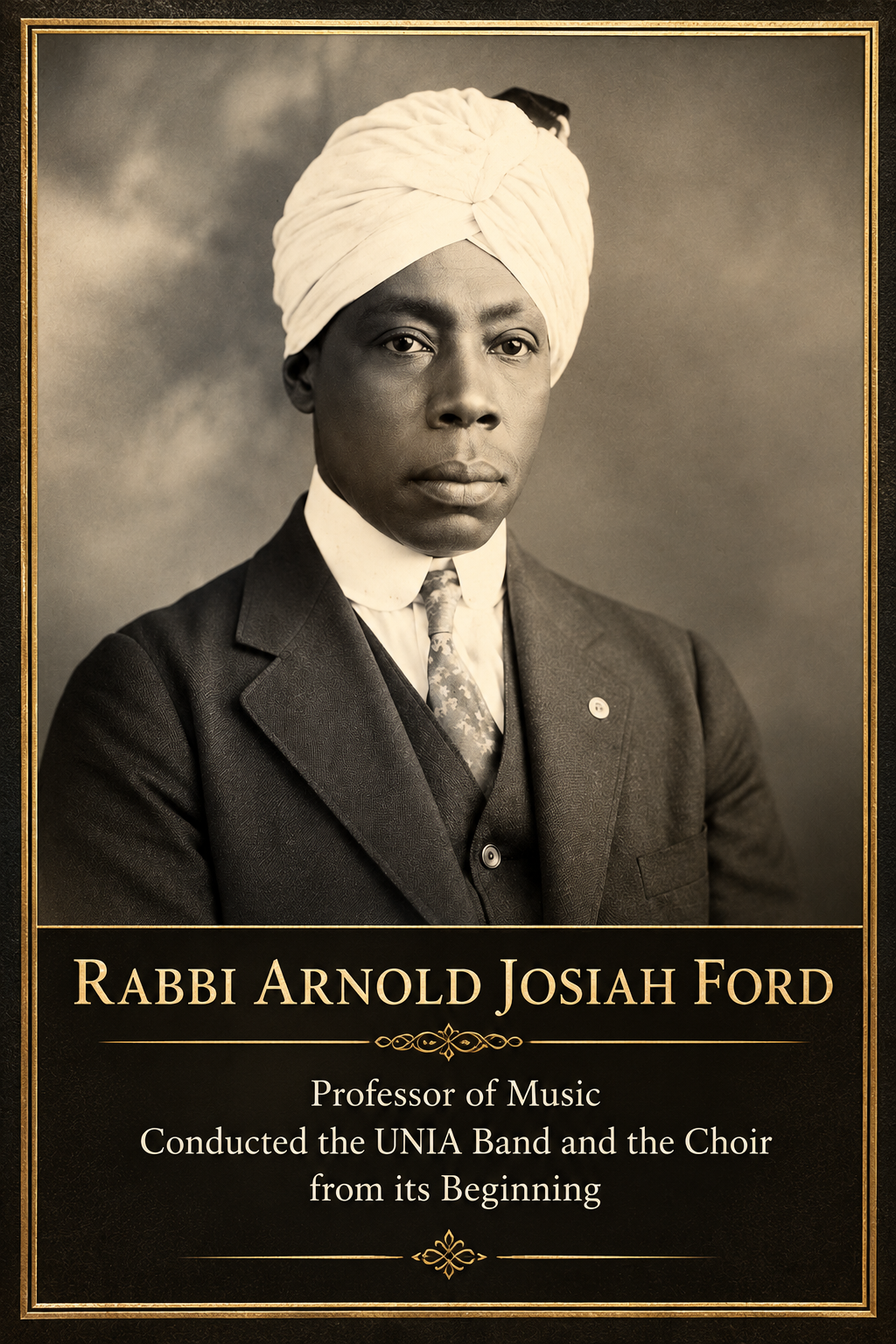
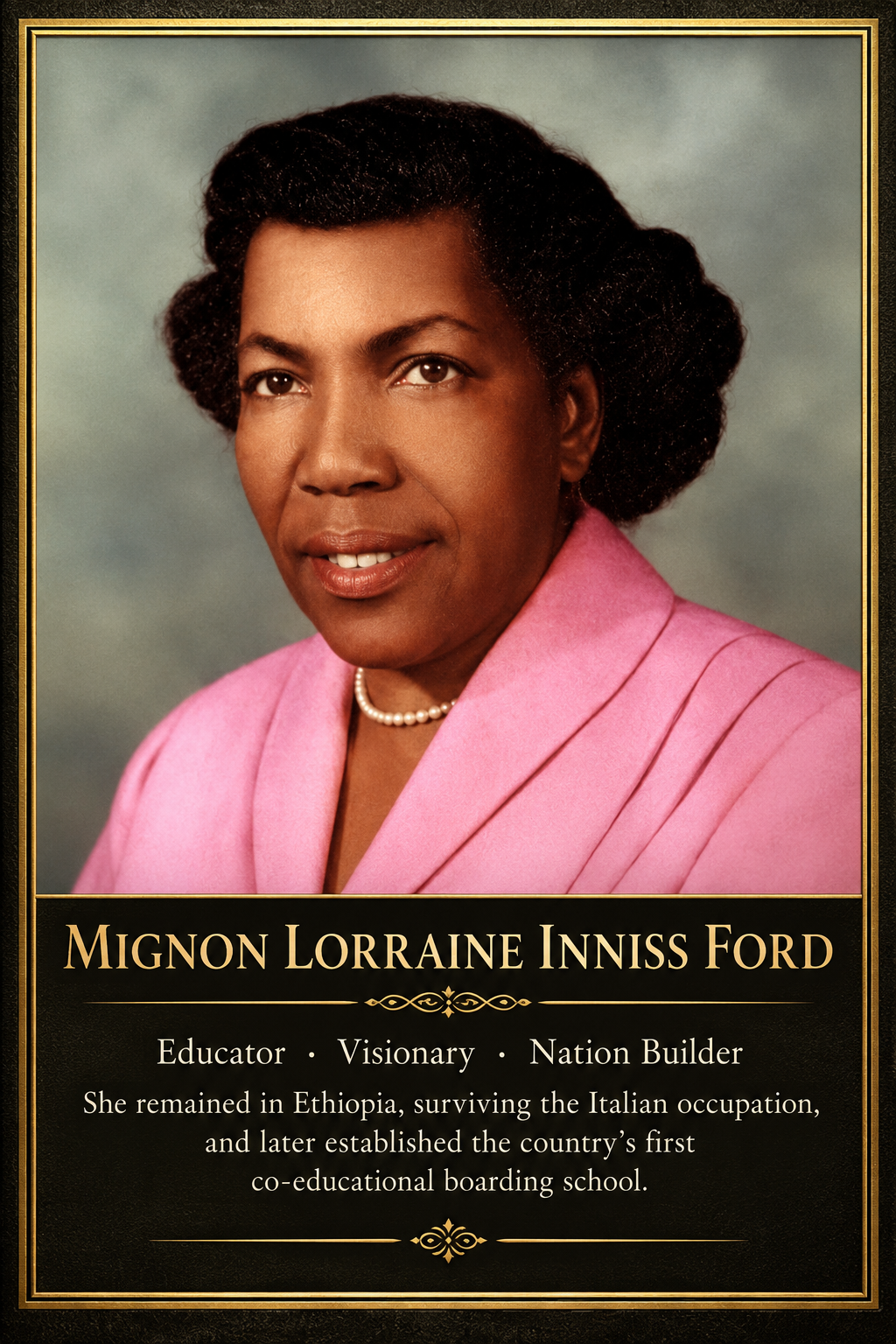
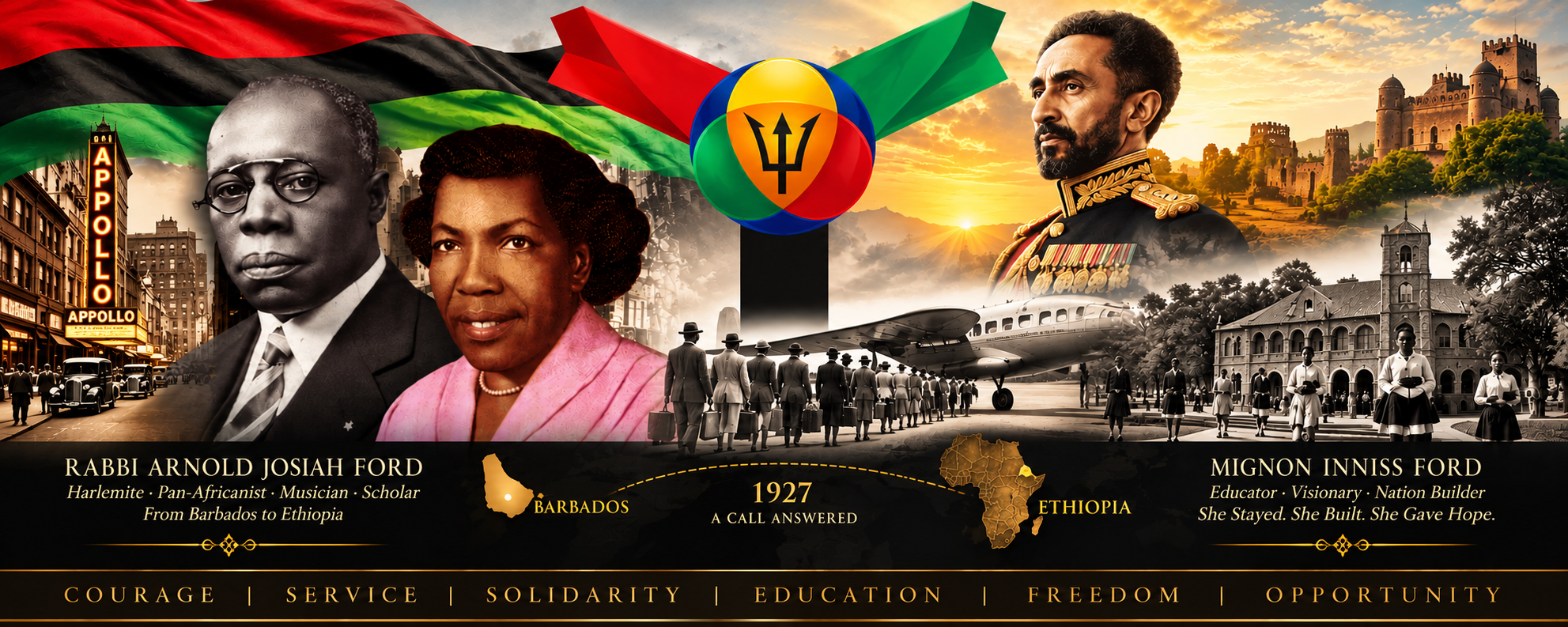
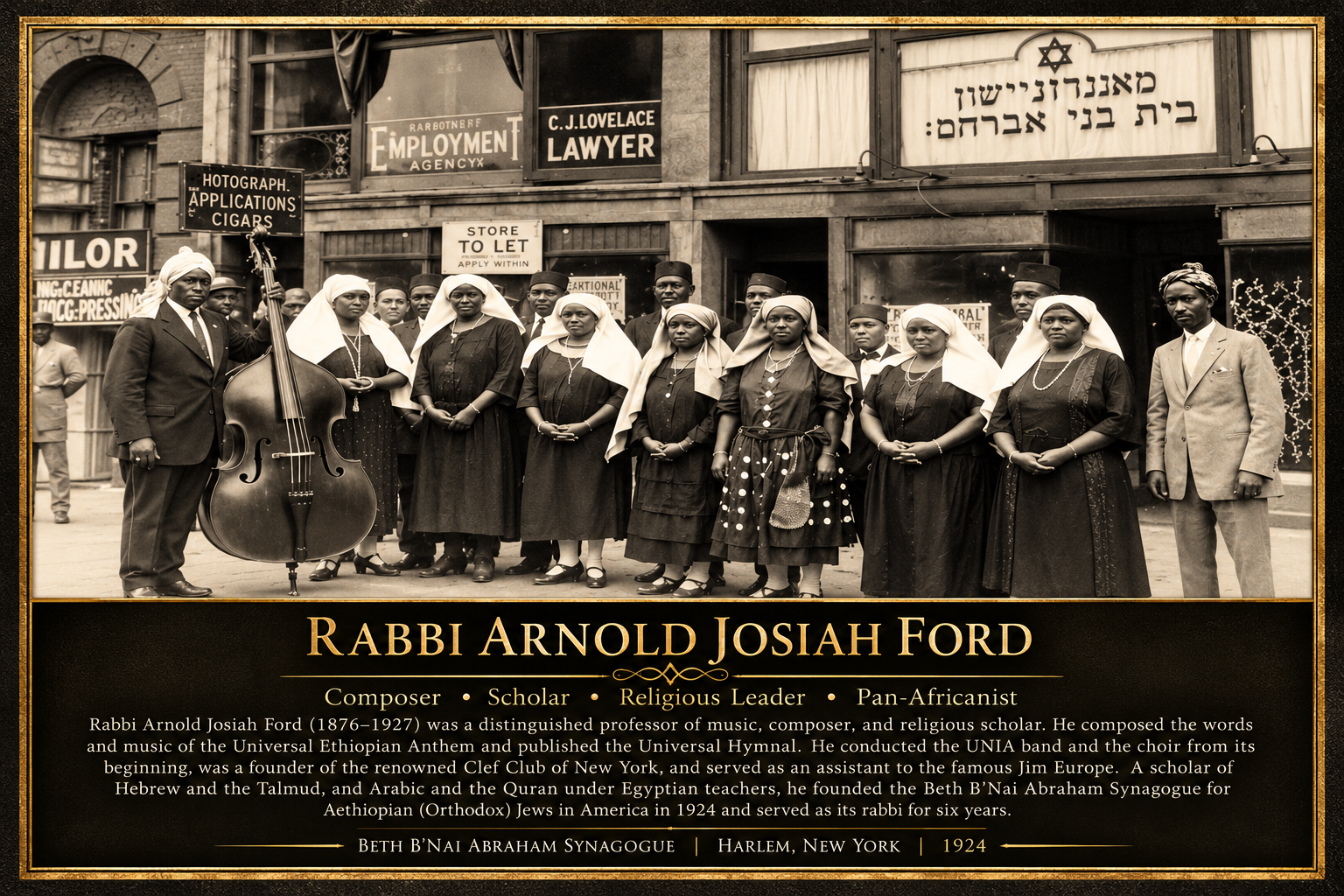
The Foundation draws its inspiration from the remarkable journeys of Rabbi Arnold Josiah Ford and Mignon Inniss Ford, whose lives connected Barbados, Harlem, and Ethiopia during a defining period of twentieth-century Pan-African history.
Their commitments to scholarship, cultural identity, education, freedom, and self-determination reflect the values that guide the Foundation.
Rabbi Ford's contributions to music, religious scholarship, and Pan-African intellectual life, together with Mignon Ford's determination to remain in Ethiopia and continue her educational work despite war and occupation, form the historical foundation upon which this institution is being developed.
Their history is our beginning. The preservation of history is our enduring responsibility.
Supporting education through preservation.
We will seek to preserve evidence with integrity, honor contributors with proper attribution, encourage responsible scholarly inquiry, and make historical knowledge accessible to present and future generations.
We believe that preserving history is not simply an act of remembrance. It is an investment in education, identity, cultural understanding, and the knowledge future generations will inherit.

01 Preservation
Safeguard historical records, photographs, manuscripts, oral histories, music, and cultural artifacts for future generations.
02 Scholarship
Encourage original research, rigorous documentation, scholarly exchange, and responsible historical interpretation.
03 Accessibility
Make historical knowledge discoverable and available to the public while respecting copyright, privacy, and archival restrictions.
04 Cultural Connection
Strengthen understanding of the relationships linking Africa, the Caribbean, the Americas, and communities throughout the African Diaspora.
05 Enduring Legacy
Transform historical remembrance into a permanent educational resource that continues to grow through new research and contributions.
The Foundation's five guiding principles
THE FORD FOUNDATION
Cultural bridge-building and historical stewardship.
THE RESEARCH INSTITUTE
Research, documentation, preservation and scholarship.
How the Research Repository & Scholarly Commons Advances The Vision
A dedicated vision for the Research Repository & Scholarly Commons
Publications & Film
Translate research into historical storytelling.
Lectures & Education
Advance understanding across generations.
Research Repository
Preserve papers, datasets and primary sources.
Scholarly Commons
Connect researchers and institutions.
Digital Museum
Bring historical collections to the public.
Archives & Oral Histories
Safeguard evidence and lived experiences.
Research Repository & Scholarly Commons
Our Repository Vision
To establish an enduring, internationally accessible scholarly resource where African Diaspora history is documented, preserved, connected, and continuously enriched through responsible research and collaboration.
Our Repository Mission
To collect, catalog, safeguard, and facilitate access to historical records, scholarly papers, research datasets, unpublished manuscripts, oral histories, and cultural materials, while providing a collaborative environment for historians, independent scholars, families, and institutions to contribute to the historical record.
Our Commitment to Contributors
We seek to ensure that every accepted contribution is responsibly documented, appropriately attributed, preserved according to established archival standards, and made discoverable under suitable access and rights conditions.
The Repository will recognize the value of established academic scholarship alongside carefully documented independent research, community knowledge, and family-held historical evidence.
Our Legacy Commitment
Every document preserved, every biography recovered, every testimony recorded, and every scholarly contribution accepted represents another opportunity to protect history from disappearance.
We preserve what was. We investigate what remains unknown. We protect what future generations deserve to know.
Contact
Feel free to contact us with any questions.
Email
info@ajmif.org
Phone
(240) 413-1046